
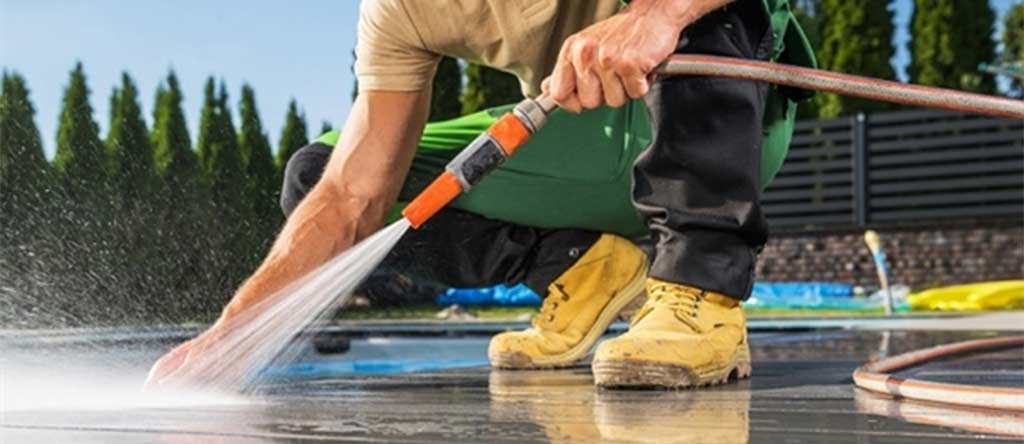
A friend of mine named Andre manages commercial properties. Strip centers mostly. One of his is in Cypress—forty thousand square feet when you add up the parking lot and all the sidewalks and common areas. Twelve tenants. Restaurant on the corner.
When he took over, the place had not undergone cleaning in years. Could’ve been longer. Nobody knew for sure.
So he called around for bids. Got three.
First guy: twelve hundred. Second guy: Thirty-eight hundred. Third guy: sixty-five hundred.
Andre called me up confused. “Same property. How are the numbers that different? Who’s trying to rip me off here?”
I told him to ask what each quote included. He didn’t.
Went with the cheap guy instead. Figured he’d pocket the savings.
Three days later the crew was still out there with what looked like a Home Depot rental. Streaks everywhere. Couldn’t do anything about the grease by the restaurant—didn’t have hot water equipment. Tenants were calling Andre’s phone nonstop. One guy threatened to withhold rent over it.
Six months later Andre hired the $3,800 company. Real equipment. Hot water. Done in eight hours.
“Should’ve listened to you,” he said.
Yeah. He should’ve.
The point is, commercial pressure washing prices look random until you understand what’s behind them. Then they make sense.
Quick Facts: Commercial Pressure Washing Prices in Texas
| Factor | Details |
| Per Square Foot | $0.10–$0.35 depending on surface type and staining level |
| Small Storefronts | $250–$800 for light cleaning |
| Large Properties | $1,000–$5,000+ for buildings, garages, complexes |
| Premium Services | Grease removal, gum cleanup, oil treatment cost more |
| Frequency Discount | Routine cleanings cost less per visit than emergency jobs |
Why Commercial Pressure Washing Costs Vary
Cleaning a storefront sidewalk is not the same as cleaning a shopping center parking lot. Not even close. Equipment’s different. Time’s different. Everything’s different.
Here’s what actually moves the needle on pricing:
Square Footage
Biggest factor. More area means more time. More water. More chemicals. More labor.
But here’s the thing: per-square-foot pricing drops as the job gets bigger. Economy of scale. A 5,000-square-foot job might run $0.25 per square foot. A 50,000 square foot job might run $0.12.
Why? Setup time is basically fixed. Equipment costs the same whether you’re cleaning 5,000 or 50,000 square feet. Travel time doesn’t change.
Large properties benefit from that math. Small storefronts pay more per square foot because the minimum job cost has to cover overhead regardless of size.
Surface Type
Concrete is cheapest. Parking lots. Sidewalks. Handles aggressive cleaning well.
Brick and stone cost more. Stucco costs more. Painted surfaces cost more. All need gentler approaches. Soft washing instead of blasting. Takes longer. Requires more technique.
Commercial roofs? Metal siding? Specialty surfaces? Those sit at the premium end. Each has its own quirks. You’re paying for someone who knows those quirks.
Staining Level
Light dirt? Standard pricing.
Heavy staining? Grease? Years of neglect? Gum everywhere? That’s a different job. More pretreatment. Longer dwell time for chemicals. Multiple passes over the same area.
Andre’s strip center had serious grease buildup from the restaurant. The $1,200 quote either didn’t notice or planned to skip it. The $3,800 quote specifically included hot water treatment for those areas.
Same property. Different scope. That’s where the price gap came from.
Equipment Requirements
Most people don’t realize this: residential equipment can’t do commercial work. Not really. Looks similar. Completely different capability.
Commercial machines pump more water. They have hot water for grease. Surface cleaners are sized for parking lots—not the little 12-inch units from Home Depot.
A proper commercial rig costs $30,000 to $50,000. Sometimes more.
Companies using residential equipment charge less. Their overhead is less. But they take three times as long. Leave uneven results. Can’t handle the hard stuff.
That’s exactly what happened to Andre.
Surface Types and Pricing Impact
| Surface Type | Price Range | Notes |
| Concrete (parking lots, sidewalks) | $0.10–$0.20/sq ft | Fastest, most straightforward |
| Brick and stone | $0.15–$0.25/sq ft | Requires more care |
| Building exteriors (siding) | $0.15–$0.30/sq ft | Often soft wash |
| Stucco | $0.20–$0.35/sq ft | Soft wash only |
| Commercial roofs | $0.25–$0.50/sq ft | Specialty techniques |
Older surfaces take longer too. Stains sink deeper into the material over time. A parking lot that’s been around 20 years needs more work than one that’s 5 years old.
Condition matters just as much as size. Sometimes more.
How Accessibility and Safety Affect Cost
Commercial cleaning has requirements that residential doesn’t. OSHA standards. Public walking by. Liability concerns. All built into the price.
- Boom lifts and rope systems—multi-story buildings need ways to reach upper levels. Equipment rental adds up.
- Traffic control—can’t just spray water with cars driving through. Cones. Barriers. Coordination.
- After-hours work—early morning. Late night. Weekends. Premium scheduling isn’t free.
- Gated access – security clearance. Key codes. Coordinating with multiple people. Takes longer.
- Insurance requirements—commercial properties want higher liability coverage. It costs money to carry.
All that safety setup? Built into the price. This is the primary distinction between residential and commercial work.
Restaurant owner in Spring—Gloria—got confused by this. Her restaurant quote was three times higher than what she paid to clean her house. Square footage wasn’t that different.
“Why so much more?” she asked.
Because: grease treatment for the patio. Hot water for the dumpster area. After-hours scheduling. Higher insurance. Environmental compliance for grease runoff.
A different job entirely.
“Oh,” she said. “That actually makes sense.”
It usually does.
Cleaning Methods Commonly Used
Most commercial jobs use multiple methods. Depends on what you’re cleaning:
- High-pressure washing—the workhorse. Removes years of dirt and tire marks from concrete. Parking lots. Sidewalks. Loading docks.
- Soft washing—low pressure with detergents. For building exteriors, stucco, signage, and painted walls. Chemicals do the cleaning. Not force.
- Hot-water cleaning—breaks down oil and grease. Cold water can’t do that. Hot-water cleaning is crucial for establishments such as restaurants, auto shops, and dumpster pads. Worth the premium.
- Eco-friendly detergents are essential near schools, medical facilities, landscaping, and public spaces. Biodegradable. Safe when applied right.
Companies that only do high-pressure can’t handle delicate surfaces. Companies without hot water can’t handle grease.
Full-service contractors have all the tools. You’re paying for that versatility.
How Often Should Commercial Properties Be Cleaned?
Depends on the property. Here’s what we typically see:
- Office buildings—once a year works for most. Twice if you’re near a busy road or construction.
- Retail centers—twice a year. Spring and fall. Tenants complain less.
- Restaurants should clean the patio and exterior every quarter. Monthly for dumpster pads if grease is bad.
- Gas stations – Quarterly at minimum. Fuel spills and oil drips never stop.
- Schools – Twice a year. Summer break and winter break are perfect timing.
- Medical facilities—twice a year. People expect healthcare buildings to be spotless.
Regular cleaning costs less per visit. Buildup never gets out of hand. The work goes faster. Uses fewer chemicals.
Emergency cleaning after years of neglect? That’s when it gets expensive.
The property manager in The Woodlands—Marcus—figured the problem out early. He puts every property on an annual contract. Twice yearly cleaning. Scheduled. Predictable. His tenants never complain because the sidewalks never get bad enough to notice.
“I’d rather pay $2,400 a year to keep it clean than $4,000 every few years to fix it after it’s gotten bad,” Marcus told me.
Smart guy. More property managers should think that way.
Commercial vs. Residential: Why Commercial Costs More
People ask this all the time. “How come commercial costs so much more than residential?”
Because it actually costs more to do. Not markup for the sake of markup. The work itself is different:
- Bigger areas—more ground to cover. Takes longer. Uses more of everything.
- Dirtier surfaces—commercial sees way more traffic. Way more contamination. Way more work to clean.
- Safety rules—OSHA compliance. Traffic control. Liability stuff. Can’t skip any of it.
- Better equipment—commercial machines cost $30K–$50K. Hot water capability. Big surface cleaners. Expensive to buy. Expensive to run.
- Weird hours—early morning. Late night. Weekends. Working around your business operations adds complexity.
- More insurance—commercial liability coverage isn’t cheap. But it protects you if something goes wrong.
All that infrastructure costs money. That money shows up in the quote. You’re not paying more because it’s a business. You’re paying more because the work requires more.
Frequently Asked Questions
How often should a commercial property be pressure washed?
Every 6 to 12 months for most properties. Restaurants, grocery stores, and schools need quarterly updates. More traffic means more cleaning. Routine maintenance keeps walkways safe and prevents permanent staining. Also costs less over time because buildup never gets out of control.
Do commercial companies use chemicals?
Yes. Biodegradable detergents that won’t kill your landscaping. They break down oil, mildew, and gum so the pressure can stay low. Ask your contractor what they’re using. Good ones will tell you without hesitation.
Do I need to close my business during cleaning?
Usually not. Most commercial work happens early morning, evenings, or weekends. Off-hours. If cleaning has to happen during business hours, crews rope off sections and direct foot traffic. Shouldn’t shut you down.
Can pressure washing damage commercial surfaces?
Not if done right. Damage happens when someone uses too much pressure on delicate materials or rushes through the job. Good companies adjust pressure for each surface. Switch to soft washing when needed. That’s the whole point of hiring professionals.
How long does it take?
Small storefront? An hour or two. Shopping center parking lot? Half a day. Big warehouse? Maybe longer. The length of the warehouse may vary depending on its size, accessibility, and level of cleanliness
}+crfHot water and pretreatment add time but give better results.
Why do quotes vary so much?
Different scope. Andre’s quotes ranged from $1,200 to $6,500 because they included different stuff. The cheap guy used residential equipment and did not apply grease. Ask exactly what’s included. Which areas? What equipment? What treatments? Otherwise you’re comparing apples to oranges.
Is hot water worth the extra cost?
For grease? Absolutely. Cold water just pushes grease around. Hot water actually dissolves it. If you’ve got a restaurant, auto shop, loading dock—anywhere with oil or grease—hot water is worth every penny.
Why Klein Pressure Washing
We clean shopping centers. Schools. Restaurants. Medical facilities. Office buildings. Industrial properties. All across Spring, Klein, The Woodlands, Cypress, and the rest of greater Houston.
Been doing this twenty years. Seen every kind of property. Every kind of mess. Every kind of challenge.
Commercial-grade equipment. Hot water when you need it. Proper insurance. Crews who actually know what they’re doing. We work after hours when that’s what makes sense for your business.
Our quotes spell out exactly what’s included. Which areas? Which surfaces. What treatments? What equipment? No confusion. No surprises when the invoice shows up.
Don’t do what Andre did. Call us first. We’ll walk your property, show you what it actually needs, and give you a number that makes sense. Then we’ll actually deliver what we promised.
Blog Posts About Power Washing – Pool Deck Cleaning Service By Klein Pressure Washing in Katy, TX.
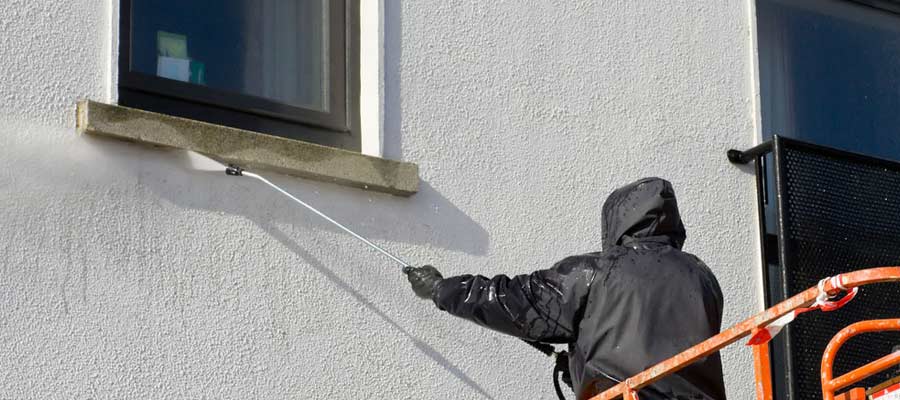
Travertine and Natural Stone Cleaning
Protect delicate surfaces with professional travertine and natural stone cleaning services. From patios and walkways to pool decks and entryways, expert pressure washing removes dirt, algae, and buildup using safe methods. Proper care helps preserve stone integrity and long-term curb appeal.
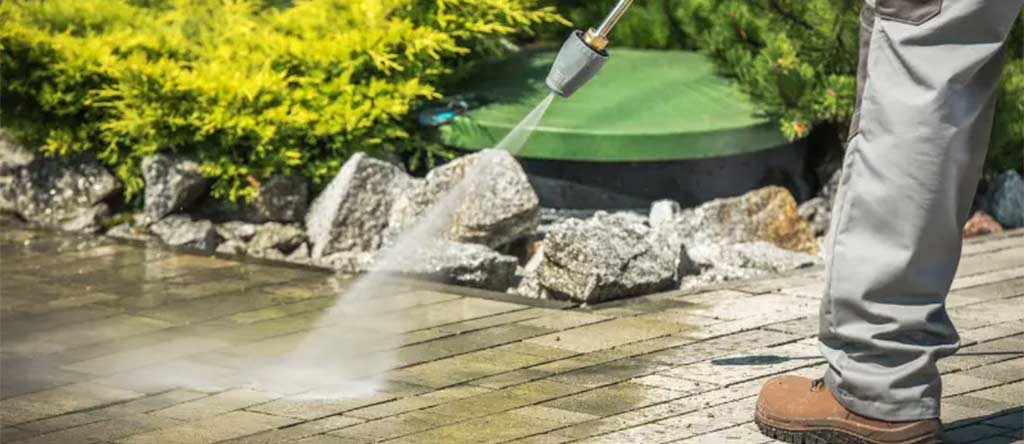
Stamped Concrete Cleaning
Restore the look of decorative surfaces with professional stamped concrete cleaning services. From patios and walkways to driveways and pool decks, expert pressure washing removes dirt, stains, and buildup without damaging the finish. Proper cleaning helps preserve appearance and extend surface life.
Sports Court Cleaning
Keep sports courts clean, safe, and playable with professional pressure washing services. From basketball and tennis courts to surrounding concrete areas, expert cleaning removes dirt, algae, and surface buildup effectively. Routine maintenance improves traction, appearance, and overall court performance.
Retaining Wall Cleaning
Keep retaining walls looking clean and structurally sound with professional cleaning services. From concrete and stone walls to landscaped retaining systems, expert pressure washing removes dirt, algae, and buildup safely. Proper cleaning helps protect surfaces and maintain a polished property appearance.