
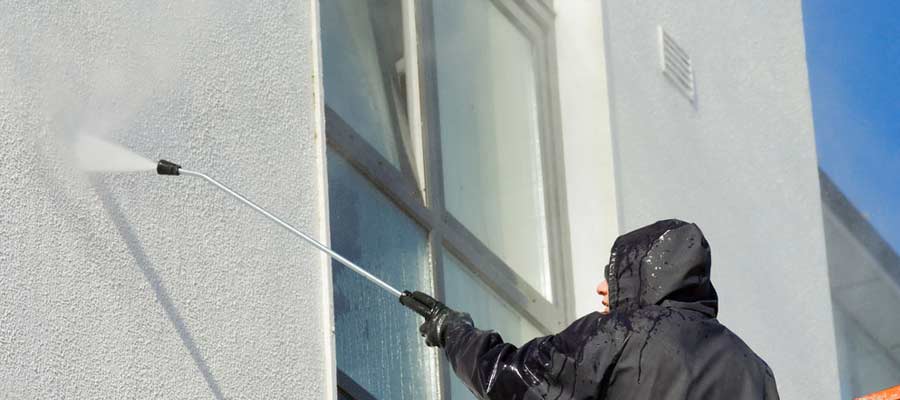
A woman I know, Karen, wanted her driveway and patio cleaned before her daughter’s graduation party. She requested quotes from three different companies.
First company: $175. Second company: $425. Third company: $650.
Same driveway. Same patio. Same job. Or so she thought.
Karen went with the $175 quote. Karen reasoned that concrete was concrete and water was water. How different could the results be?
As it turned out, the results were quite different.
The guy showed up with a residential pressure washer—the kind you buy at Home Depot for $300. No chemicals. No pre-treatment. No surface cleaner attachment. The only tools used were a wand and water.
She dedicated two hours to creating stripes on her driveway. The lines where the passes overlapped were clearly visible. Oil stains barely touched. The patio still had mold in the corners.
“I figured the $175 guy was a bargain,” Karen told me later. “Had to call someone else to fix it. Ended up paying twice.”
The $650 quote had included hot water treatment, professional-grade degreasers, mold treatment, and sealing afterward. The $425 quote was similar but without sealing. Both would have left her with a clean driveway for one price.
Three quotes. Each quote encompasses three distinct scopes of work. Three completely different outcomes.
Power washing pricing isn’t random, even though it feels that way sometimes. There are real factors driving costs—some obvious, some hidden. Understanding what affects pricing helps you know whether you’re getting a fair deal or getting taken. And in Texas, where our climate creates unique cleaning challenges, those factors matter even more.
Quick Facts: Power Washing Pricing in Texas
| Factor | Details |
| Residential Range | $150–$600 for most jobs (driveways, patios, house washing) |
| Commercial Range | $1,000–$5,000+ depending on scope and property size |
| Per Square Foot | $0.15–$0.50 depending on surface type, condition, accessibility |
| Texas Factor | Heat, humidity, and clay soil create tougher conditions—can affect pricing |
| Quote Variations | Big price differences usually mean different scope, not just different margins |
What Actually Drives Power Washing Prices
Several factors determine what you’ll pay. Understanding these helps you evaluate quotes and know what questions to ask:
Square Footage
Most obvious factor. A bigger area means more time, more water, more chemicals, and more labor. Simple math.
But per-square-foot pricing isn’t always linear. There’s usually a minimum charge that makes small jobs relatively more expensive per square foot than large ones. A 200-square-foot patio might cost $150 ($0.75/sq ft). A 600-square-foot driveway might cost $200 ($0.33/sq ft). Economy of scale.
Setup time is the same whether you’re cleaning 200 or 600 square feet. Equipment transport. Hose connections. Chemical mixing. Those fixed costs get spread across more area on bigger jobs.
Most companies have minimum charges around $125–$175. Below that, it’s not worth mobilizing equipment and crew. Even if your job only takes 30 minutes of actual cleaning, there’s still an hour of setup, travel, and breakdown on each end.
Surface Type and Material
Different materials need completely different approaches. Different equipment. Different chemicals. Different skill levels. All affect price:
- Concrete—Straightforward. Can handle higher PSI. Usually cheapest per square foot. Standard residential driveway cleaning.
- Wood (decks, fences)—Needs lower pressure. More care required. Takes longer. Costs more. Risk of damage means more expertise needed.
- Pavers—Individual pieces. Joint sand to deal with. More labor-intensive. Often needs re-sanding afterward. Premium over concrete.
- Natural stone—delicate. Requires expertise and gentle technique. A wrong approach causes permanent damage. Premium pricing reflects risk and skill.
- House siding—multiple stories, windows to avoid, trim work, and different materials on the same house. All affect price.
A homeowner in The Woodlands—a guy named David with travertine pavers on his pool deck—got quotes ranging from $300 to $900 for the same job. The $300 quote came from someone who admitted he’d never cleaned travertine before.
“I went with the $600 guy who showed me photos of similar jobs,” David said. “Expensive material deserves someone who knows what they’re doing.”
Smart choice. Travertine mistakes are expensive to fix.
Condition and Stain Level
Light dirt and general grime? Standard pricing applies. One pass, basic chemicals, done.
Heavy oil stains? Rust? Years of neglect? Thick mold growth embedded deep? That’s extra labor. Extra chemicals. Multiple passes. More time. Reasonable contractors charge appropriately for tougher jobs.
In Texas, we see accelerated staining. Heat cooks oil into concrete faster than cooler climates. Humidity breeds mold faster. Properties in Spring, The Woodlands, and Klein often have tougher stains than properties in drier parts of the country. Same square footage, harder job.
A property manager in Cypress named Andre, who oversees about 40 rental properties, told me he used to feel frustrated when quotes varied based on condition.
“Then I realized—a driveway that hasn’t been cleaned in five years takes three times longer than one cleaned annually,” Andre said. “Now I budget for condition, not just size.”
He learned. Most people learn eventually.
Accessibility and Site Conditions
Easy street access, flat ground, wide open spaces? Standard pricing. Equipment rolls right up. Work proceeds smoothly.
But not every property is easy:
- Gated backyards requiring equipment hauled through house or narrow side yard
- Tight spaces limiting equipment choices—can’t use surface cleaner, hand wanding only
- Second-story work requiring special equipment or ladders
- Steep slopes or challenging terrain affecting setup and safety
- Long distance from water source requiring extended hoses
All these affect labor time and equipment needs. Costs more. Not a ripoff—just reality.
Geographic Location
Houston metro area pricing differs from rural Texas. Travel time, local cost of living, competition levels—all factor in.
Properties in Spring, The Woodlands, Cypress, and Klein generally see similar pricing since they’re in the same market. Lots of competition keeps prices reasonable. Established providers know the area. Multiple options for consumers.
Outlying areas with fewer providers might pay a premium—or travel fees. If a company has to drive 45 minutes each way to reach you, that’s 90 minutes of unbillable time. Has to be reflected somewhere.
Some companies charge travel fees explicitly. Others build it into pricing. Ask upfront so there are no surprises on the invoice.
HOA communities sometimes get discounts for multiple jobs in the same neighborhood—less travel time per job means savings that can be passed along.
Additional Services and Add-Ons
Basic pressure washing is one price. But these are separate costs that may or may not be included:
- Post-cleaning sealing for long-term protection
- Re-sanding paver joints with polymeric sand
- Applying protective coatings or stains to wood
- Gutter cleaning combined with house washing
- Window cleaning add-on
- Hot water treatment for grease and oil
- Pre-treatment with specialized chemicals
When comparing quotes, make sure you’re comparing apples to apples. A $300 quote with sealing is different from a $200 quote without it.
Company Overhead and Experience
Legit companies with proper insurance, licensing, commercial equipment, trained staff, and years of experience cost more than guy-with-truck operations. That’s just reality.
You’re paying for professionalism. Accountability. Quality results. Someone who shows up when they say they will. Someone with insurance that covers damage. Someone who knows what they’re doing.
Usually worth the premium. Karen experienced this firsthand when she had to pay $175 for a subpar job, and then again for the necessary repairs. It would have been cheaper to pay $425 once.
Understanding Why Quotes Vary So Much
When quotes vary significantly—like Karen’s $175 to $650 spread—it’s usually because:
- One quote may have a different scope, encompassing pre-treatment, post-treatment, and sealing. Another includes just basic washing. Same job description, completely different services.
- Equipment quality—consumer-grade pressure washer vs. commercial equipment. Different results. Different pricing.
- Insurance and licensing—Properly insured companies cost more but protect you from liability if something goes wrong. Uninsured operators are cheaper for a reason.
- Experience level – 20-year professionals command higher rates than newcomers. Often worth every penny in results and reliability.
- Business model—Established company with office, employees, and overhead vs. solo operator working out of a truck. Different cost structures.
None of these differences is inherently wrong. But you need to understand what you’re paying for. Cheapest isn’t always best value. Most expensive isn’t always necessary.
Typical Price Ranges by Job Type
Here’s what you should generally expect in the Houston area:
| Job Type | Basic Range | With Add-Ons |
| Driveway (300–500 sq ft) | $150–$250 | $250–$400 |
| Patio (200–400 sq ft) | $150–$300 | $250–$450 |
| House Washing (1,500–2,500 sq ft) | $250–$400 | $350–$600 |
| Deck (200–400 sq ft) | $200–$350 | $350–$550 |
| Fence (100–150 linear ft) | $150–$300 | $250–$450 |
Prices outside these ranges aren’t automatically wrong—but ask specifically why. Unusually low might mean cut corners. Unusually high might mean premium service or might mean overcharging. Get details.
Red Flags and Green Flags in Quotes
Red Flags—Be Cautious
- Quote given without seeing the property—accurate pricing requires seeing the job. Phone quotes are estimates at best.
- Significantly below market rate—If it’s 50% cheaper than everyone else, something’s missing. Insurance, quality, or hidden fees.
- Can’t provide proof of insurance—legitimate companies have liability insurance. If they damage your property, their insurance covers it.
- There is no written quote provided, as verbal agreements often result in disputes. Get it in writing.
- Vague about what’s included—”We’ll “take care of it” isn’t a scope of work. Specifics matter.
Green Flags—Good Signs
- Visits property before quoting—shows professionalism and ensures accurate pricing.
- Detailed written quote—itemizes what’s included, what’s extra, and the total price.
- Proof of insurance is readily available—legitimate companies carry it and share it.
- Good contractors inquire about your expectations and strive to understand your needs.
- References and reviews are available—track record matters. Check them.
Frequently Asked Questions
Why do quotes vary so much between companies?
Different companies include different things. One might include pretreatment and sealing. Another might include just basic washing. Always ask what’s specifically included. Apples-to-apples comparison matters.
What’s a fair price for my driveway?
Average residential driveway (300–500 square feet): $150–$300 for basic cleaning. Heavily stained or large driveways: $300–$500. Way outside this range? Ask specifically why.
Should I always go with the lowest bid?
Nope. Lowest bid often means cut corners, no insurance, or hidden fees that appear later. Mid-range quotes from licensed, insured, experienced professionals usually represent the best value. Karen learned this lesson.
Are there hidden fees I should watch for?
Ask upfront about travel fees, minimum charges, chemical fees, and wastewater disposal fees. Good companies disclose everything in writing before starting work. No surprises should be the standard.
Does time of year affect pricing?
Sometimes. Spring is a busy season in Texas—some companies charge premium rates when demand is high. Winter might offer discounts, but weather limits available cleaning days. Fall is often the sweet spot.
How do I know if a quote is fair?
Get at least three quotes. Compare scope of work, not just price. Check reviews and references. Trust your instincts—if something feels off, it probably is. Fair pricing comes with transparency.
Is it worth paying more for an established company?
Usually. Established companies have a reputation to protect. Insurance if things go wrong. Experience handling problems. Accountability if they don’t deliver. Worth the premium for most homeowners. New operators can be fine, but you’re taking more risk.
What should a quote include?
Detailed scope of work—what surfaces, what treatments, what’s included, and what’s extra. Total price. Timeline. Company contact information. Insurance certificate available on request. Anything less is a red flag.
Why Klein Pressure Washing
We’ve been pricing jobs fairly across Spring, Klein, The Woodlands, Cypress, and greater Houston for over 20 years. Thousands of quotes. Thousands of jobs. No surprises. No games. No hidden fees that appear after the work is done.
We provide detailed written quotes that explain exactly what’s included. Pretreatment? Listed. Chemicals? Listed. Sealing? Itemized separately so you know exactly what you’re getting and what it costs. Transparency is the standard.
We visit every property before quoting. Look at the actual conditions. Identify the actual challenges. See what we’re dealing with. Give you an accurate price—not a guess based on a phone description.
Properly insured. Licensed. Commercial equipment. Trained technicians. Twenty years of experience solving problems and delivering results. That’s what our pricing reflects.
Don’t end up like Karen—paying twice for the same job because the cheap quote wasn’t actually a bargain. Give us a call. We’ll assess your property, explain what it needs, and give you a straight quote.
Fair pricing. Professional results. No regrets.
Blog Articles Related to Power Washing – Driveway Pressure Washing Service By Klein Pressure Washing in Hilshire Village, Texas.
Travertine and Natural Stone Cleaning
Protect delicate surfaces with professional travertine and natural stone cleaning services. From patios and walkways to pool decks and entryways, expert pressure washing removes dirt, algae, and buildup using safe methods. Proper care helps preserve stone integrity and long-term curb appeal.
Stamped Concrete Cleaning
Restore the look of decorative surfaces with professional stamped concrete cleaning services. From patios and walkways to driveways and pool decks, expert pressure washing removes dirt, stains, and buildup without damaging the finish. Proper cleaning helps preserve appearance and extend surface life.
Sports Court Cleaning
Keep sports courts clean, safe, and playable with professional pressure washing services. From basketball and tennis courts to surrounding concrete areas, expert cleaning removes dirt, algae, and surface buildup effectively. Routine maintenance improves traction, appearance, and overall court performance.
Retaining Wall Cleaning
Keep retaining walls looking clean and structurally sound with professional cleaning services. From concrete and stone walls to landscaped retaining systems, expert pressure washing removes dirt, algae, and buildup safely. Proper cleaning helps protect surfaces and maintain a polished property appearance.