
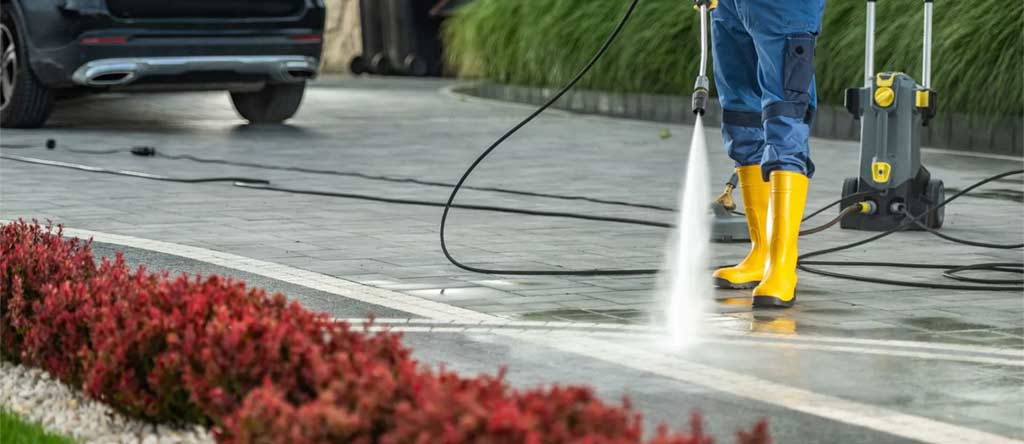
I know a woman named Linda who resides in The Woodlands. The Woodlands is home to a beautiful house featuring a large covered patio out back. Travertine pavers. The outdoor kitchen features a built-in grill. Fire pit surrounded by seating. String lights overhead. The whole setup cost her and her husband close to $40,000 when they built it eight years ago.
For the first few years, they used that patio constantly. Weekend barbecues. Morning coffee watching the kids play in the yard. Evening drinks with neighbors. The outdoor living space they’d always wanted.
Then gradually, they stopped using it.
Not because anything broke. Because the travertine had turned gray-green with mold. Because black stains spread from the grill area where grease had dripped over the years. Because the grout between pavers had grown dark with embedded dirt. Because walking out there barefoot felt… unpleasant. Gritty. Wrong.
“We spent $40,000 on a space we didn’t want to use anymore,” Linda told me. “That’s embarrassing to admit. But it’s true. The patio was right there. We just… avoided it.”
We cleaned that patio in about three hours. Careful work—travertine needs gentle treatment. Low pressure. pH-neutral cleaners. Patience. When we finished, Linda stood there looking at it like she was seeing it for the first time in years.
“I forgot how beautiful it was,” she said. “We had people over that same weekend. First time in two years.”
That’s what professional patio cleaning is actually about. Not making things Instagram-worthy—though yeah, that happens. It’s about reclaiming a space you invested in. Making it usable again. Protecting what you paid for. Getting back the outdoor living you designed.
Quick Facts: Patio Pressure Washing in Texas
| Factor | Details |
| Typical Cost | $150–$400 for most patios; $400–$800+ for large or heavily stained |
| Recommended Frequency | Once or twice yearly; spring before entertaining, fall after summer |
| Safe PSI by Material | Concrete: 2,000–3,000 | Pavers: 1,200–2,000 | Stone: 1,000–1,500 |
| Time Required | 2–4 hours, including furniture moving and detail work |
| Texas Challenge | Humidity breeds mold fast; UV fades surfaces; pollen coats everything |
Why Professional Patio Cleaning Makes a Real Difference
DIY pressure washing works for some things. Patios? This is where professionals really earn their keep. Here’s why:
Material Knowledge
Different materials need completely different approaches. Concrete can handle higher PSI. Natural stone needs gentle treatment. Pavers have joint sand that washes out if you’re not careful. Stamped concrete has surface treatments that strip off under too much pressure.
Professionals know these differences. Won’t wreck your expensive surfaces learning on your dime.
A homeowner in Cypress—a guy named Robert with a stamped concrete patio that cost him $15,000—tried DIY pressure washing. Used the same settings he used on his driveway. Stripped the color and texture off a 10-square-foot section before he realized what was happening.
“The patch job cost $800,” Robert told me. “And it still doesn’t match perfectly. Should have just hired someone from the start.”
He’s not wrong. Different materials. Different approach. No exceptions.
Proper Equipment
Commercial-grade washers with adjustable PSI. Surface cleaners that provide even coverage without streaks. Hot water capability for tough organic stains. Eco-friendly solutions safe for surrounding plants and grass.
This equipment costs thousands of dollars. Not worth buying for one patio cleaning. Not even worth renting in most cases—rental equipment is inconsistent and often poorly maintained.
Professional equipment delivers professional results. Simple as that.
Efficiency and Speed
What takes you a full weekend takes professionals 2–4 hours. That’s not just equipment—it’s technique. Experience. Knowing efficient cleaning patterns that cover everything without wasted motion.
We’ve cleaned thousands of patios across Spring, The Woodlands, Klein, and Cypress. You’re doing it for the first time. Maybe the second. That experience gap shows in the results and the time.
Time has value. Your weekend has value. Spending Saturday wrestling with a rented pressure washer—figuring out the settings, learning technique through trial and error, dealing with tangled hoses and inconsistent pressure—that’s a real cost even if it doesn’t show up on a receipt.
Consistent Results
No streaks. No missed spots. No etching or damage. No lines where passes overlapped wrong. Just clean, uniform surfaces that look professionally done.
Because they are professionally done. That’s the point.
Common Patio Materials and How We Clean Them
Every material needs its own approach. Here’s what we see in the Houston area and how we handle each:
Concrete Patios
Most common material in Texas. Durable. Affordable. Handles Texas heat well. Can take 2,500–3,000 PSI without problems when cleaned properly.
We use surface cleaners for even coverage—no streaks, no lines, no missed spots. Pre-treat oil or rust stains with appropriate chemicals. Can apply sealer after cleaning for longer-lasting protection against future staining.
Concrete is forgiving—but not foolproof. Wrong technique still causes etching. Still creates visible lines where passes overlapped incorrectly. Still leaves patterns if you’re not careful. Experience matters even with the most durable material.
A property manager in Klein named Andre, who oversees about 40 rental properties, told me he tried to have his maintenance crew clean the patios at his rentals.
“Looked worse than before,” Andre said. “Lines everywhere. Uneven color. Had to explain to tenants why the patio looked striped.”
Now he calls professionals. Costs more per cleaning. Saves him complaints and repair costs. Worth it.
Paver Patios
Individual brick, stone, or concrete pieces set with joint sand. Beautiful when clean. Disaster when cleaned wrong.
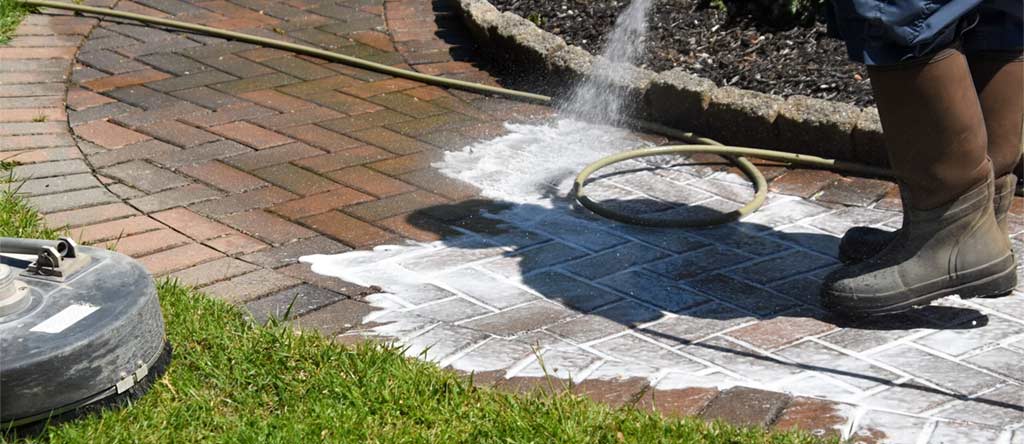
Need lower pressure—1,500–2,000 PSI—to avoid washing out sand between pavers. After cleaning, we re-sand joints with polymeric sand that locks pavers in place, prevents weed growth, and resists washout better than regular sand.
A homeowner in Spring—a woman named Michelle with a beautiful brick paver patio—had a handyman pressure wash it without understanding paver care. Blasted out half the joint sand. Pavers started shifting. Weeds came up everywhere within two months.
“He said he knew what he was doing,” Michelle told me. “Clearly he didn’t.”
We re-sanded her entire patio and showed her what proper paver cleaning looks like. Now she calls us every spring.
Stamped Concrete
Decorative concrete with texture and color designed to look like stone, brick, slate, or other materials. Popular in newer Houston-area homes. Beautiful when maintained. Requires careful pressure control to keep it that way.
Too much pressure strips the surface treatment. Removes the color. Damages the texture pattern. What took professional installers days to create can be ruined in minutes by someone who doesn’t understand the material.
We use a gentler approach plus appropriate cleaners to preserve the finish. Often recommend resealing after cleaning to protect the surface treatment and restore the color depth. The sealer is what protects the decorative layer—keeping it fresh matters.
Natural Stone
Natural stone, such as travertine, flagstone, slate, and bluestone, is not only beautiful but also delicate. The most expensive patio material and the one that requires the most care. Get it wrong and you’ve damaged something that costs $15–$30 per square foot to replace.
Needs lowest pressure—1,000–1,500 PSI—and pH-neutral cleaners. Acidic cleaners damage some stones. Alkaline cleaners damage others. Wrong pressure etches the surface permanently. The wrong cleaner leaves discoloration that won’t come out.
Common in high-end homes in The Woodlands and Spring. Linda’s travertine patio was in this category—it needed three hours of careful work to clean without damage. Worth every minute. Worth every extra precaution.
If you have natural stone, hire a professional. Period. The risk-reward calculation doesn’t favor DIY when you’re dealing with $20,000+ worth of material.
Houston-Area Patio Challenges
Texas climate creates specific problems for outdoor living spaces:
- Rapid mold growth—Houston humidity means mold appears fast. Really fast. Especially on north-facing patios or areas under trees. What stays clean for a year in Arizona needs cleaning twice yearly here.
- UV degradation—The intense Texas sun fades colored concrete and pavers. Over time, the intense Texas sun bleaches out the pigment. Regular cleaning plus sealing helps preserve color longer.
- Pollen and tree debris—spring in Texas means everything gets covered in yellow-green film. Oak tassels. Pine needles. Pollen from every plant for miles. Regular cleaning prevents it from bonding to porous surfaces.
- Clay soil staining—Rain splashes clay-heavy Houston soil onto patio edges. Creates reddish-brown stains on light-colored surfaces. Needs specific treatment to remove.
- Year-round growth—no winter freeze to kill organic growth like northern states get. Mold, algae, and mildew grow 12 months a year here. No natural reset.
Properties in Spring, Klein, The Woodlands, and Cypress deal with all of these factors. Annual patio cleaning isn’t excessive—it’s realistic for Texas conditions.
What’s Included in Professional Patio Cleaning
When you hire Klein Pressure Washing, here’s what you get:
- Pre-inspection and material identification—We look at your patio before we touch it. Identify the material. Note problem areas. Plan the approach. No surprises.
- Furniture and planter moving—We move everything off the patio. Clean underneath. Put it all back when we’re done. You don’t have to do anything.
- Pre-treatment of tough stains—oil, rust, and mold—each gets appropriate chemical treatment before pressure washing. Loosens the bond. Makes removal easier and more complete.
- Pressure washing with appropriate PSI—the right pressure for your material. No damage. No shortcuts. Even coverage across the entire surface.
- Edge and detail work—Careful attention around landscaping, house foundation, and outdoor fixtures. The edges matter as much as the middle.
- Re-sanding paver joints if applicable—If you have pavers, we re-sand with polymeric sand after cleaning. Locks pavers in place. Prevents weeds. Included in the service.
- Optional sealing—Additional protection for your investment. Prevents stain penetration. Slows organic growth. Extends time between cleanings.
- Final inspection and cleanup—walk the patio with you. Point out any limitations. Make sure you’re satisfied before we leave.
Frequently Asked Questions
How often should I have my patio professionally cleaned?
Once or twice a year for most Texas homes. Spring before entertaining season. Fall after summer wear. More frequently if you’ve got heavy tree coverage, visible mold, or upcoming events where you want the patio looking its best.
Will pressure washing damage my patio furniture?
We move furniture before cleaning and put it back after. Most outdoor furniture can be cleaned too if you want—we adjust pressure based on material. Aluminum, wicker, plastic, and teak—each gets appropriate treatment.
What about the sand between my pavers?
Some sand loss is normal during cleaning. Expected, actually. We re-sand joints afterward with polymeric sand that hardens, locks pavers in place, prevents weeds, and lasts longer than regular sand. Part of the service.
Is the cleaning solution safe for my plants and grass?
We use biodegradable, plant-safe solutions and protect sensitive plants with plastic sheeting during application. A professional approach minimizes environmental impact while still getting your patio genuinely clean.
How long until I can use my patio again?
Usually, you can use your patio again the same day after it dries, which can take up to 2–4 hours in the Texas heat. If we seal it, you’ll need to wait 24–48 hours before heavy use to let the sealer cure properly. We’ll tell you exactly what to expect.
Should I seal my patio after cleaning?
Good idea for most materials. Sealing prevents stain penetration, slows organic growth, protects against UV fading, and makes future cleaning easier. We offer this as an add-on service. This service is particularly beneficial for natural stone or stamped concrete surfaces.
Can you clean around my outdoor kitchen and grill?
Absolutely. We clean around outdoor kitchens, grills, fire pits, and other fixtures all the time. All we need is access to these areas, and we are capable of cleaning them thoroughly. Grease stains from cooking are common—we have degreasers specifically for that.
What if my patio has multiple materials?
Common in outdoor living spaces—concrete pad with stone veneer, brick pavers around a concrete fire pit, etc. We adjust pressure and technique for each material as we work. Takes a bit longer but ensures nothing gets damaged.
Do you clean covered patios differently than uncovered?
Covered patios often have less UV damage but more trapped moisture and mold. Uncovered patios get more sun fading but better airflow. Different challenges, similar techniques. We assess each patio individually.
Why Klein Pressure Washing
We’ve cleaned thousands of patios across Spring, Klein, The Woodlands, Cypress, and greater Houston over 20+ years. Every material. Every condition. From simple concrete slabs to $50,000 outdoor living spaces with travertine, outdoor kitchens, and custom fire features.
We know Texas outdoor spaces. Know what humidity does to travertine. Know how to handle stamped concrete without stripping the finish. Know when pavers need re-sanding and when they don’t. Know the difference between mold that comes off easy and mold that needs extra treatment.
Commercial-grade equipment. Plant-safe solutions. This technique ensures cleaning without causing any damage. Results that bring your patio back to life and make it a space you actually want to use again.
Don’t be like Linda—spending eight years avoiding a $40,000 investment because it got too dirty to enjoy. Don’t be like Robert—trying to DIY and creating an $800 repair bill. Some jobs need professional equipment and experience.
Give us a call. We’ll assess your patio, identify the material, explain what it needs, and give you a straight quote. No pressure. No games. Just honest assessment and professional service.
Your outdoor space. Usable again. That’s the goal.
Blogs About Pressure Washing – Fleet & Equipment Washing Service By Klein Pressure Washing in League City, Texas!
Travertine and Natural Stone Cleaning
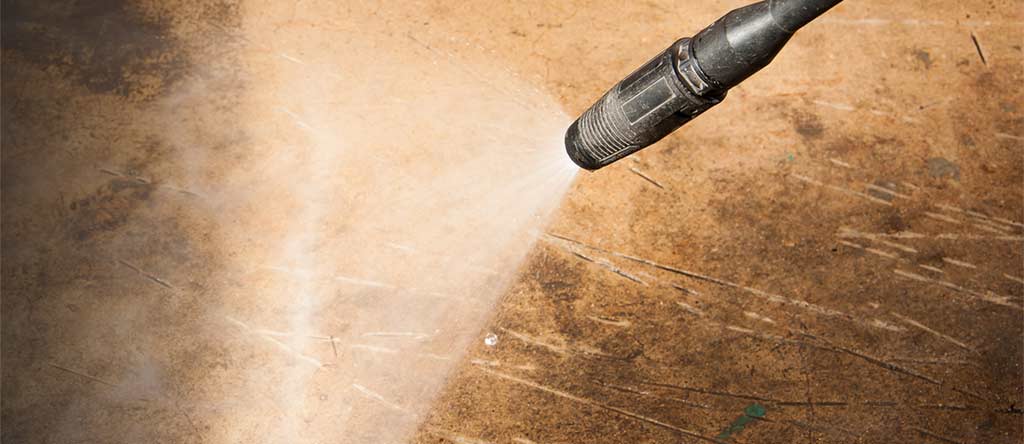
Protect delicate surfaces with professional travertine and natural stone cleaning services. From patios and walkways to pool decks and entryways, expert pressure washing removes dirt, algae, and buildup using safe methods. Proper care helps preserve stone integrity and long-term curb appeal.
Stamped Concrete Cleaning
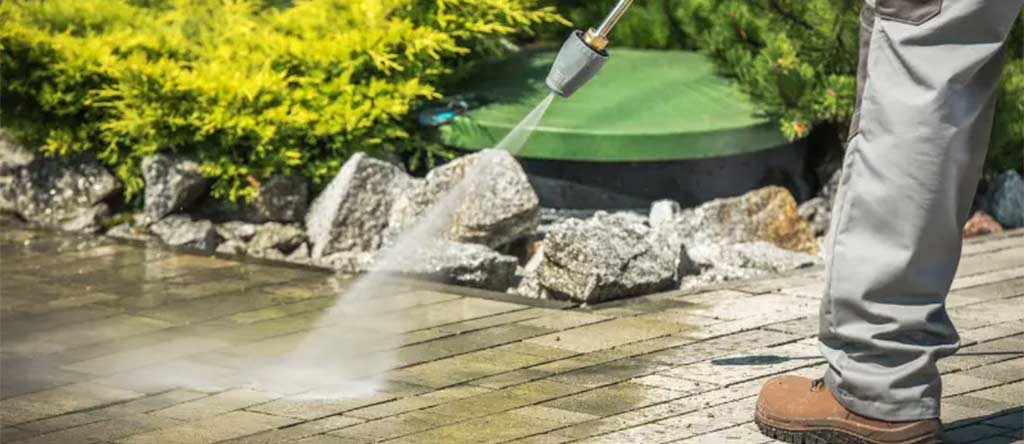
Restore the look of decorative surfaces with professional stamped concrete cleaning services. From patios and walkways to driveways and pool decks, expert pressure washing removes dirt, stains, and buildup without damaging the finish. Proper cleaning helps preserve appearance and extend surface life.
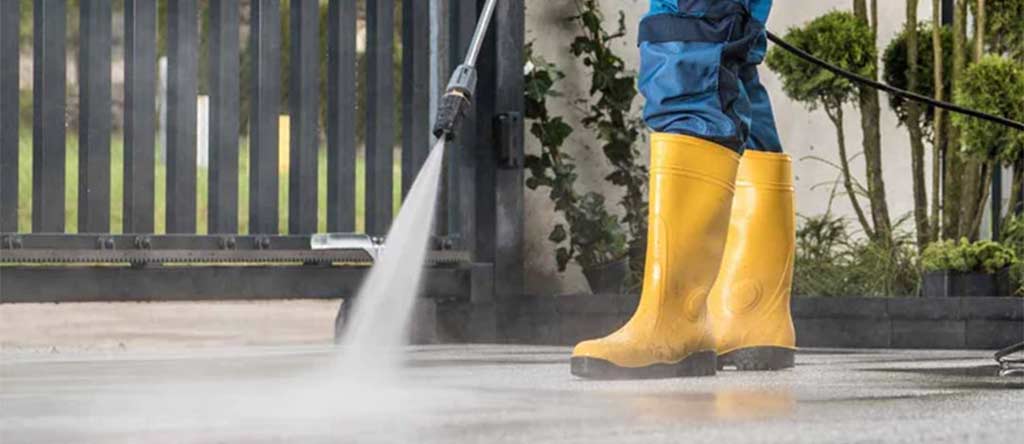
Sports Court Cleaning
Keep sports courts clean, safe, and playable with professional pressure washing services. From basketball and tennis courts to surrounding concrete areas, expert cleaning removes dirt, algae, and surface buildup effectively. Routine maintenance improves traction, appearance, and overall court performance.
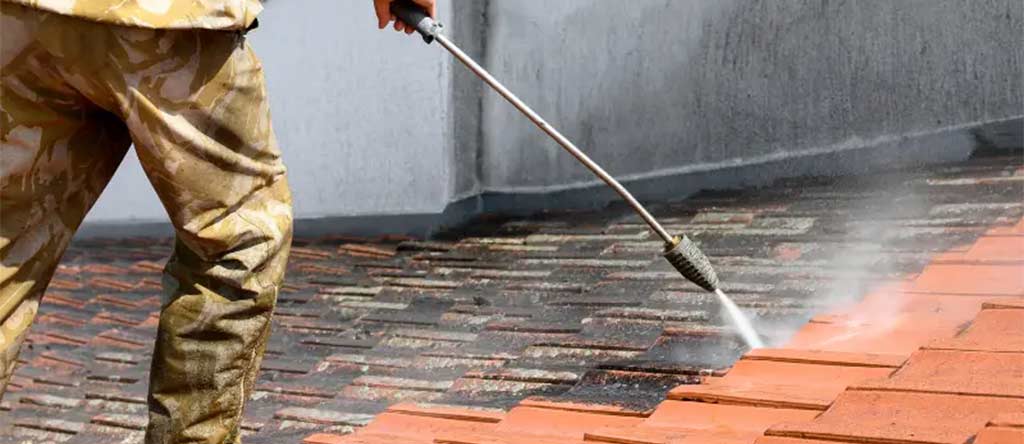
Retaining Wall Cleaning
Keep retaining walls looking clean and structurally sound with professional cleaning services. From concrete and stone walls to landscaped retaining systems, expert pressure washing removes dirt, algae, and buildup safely. Proper cleaning helps protect surfaces and maintain a polished property appearance.