
I know a guy named Tony who lives in Spring. Nice house. The house boasts a large concrete driveway that extends to a three-car garage. When he bought the place five years ago, that driveway was pristine. Light gray. Clean lines. It looked like it belonged in a magazine.
Five years of Houston weather changed that.
His truck was covered in oil stains. That greenish film that shows up after summer humidity. Tire marks. The dirt appeared to form a permanent bond with the concrete. The whole thing looked worn out. Aged. It appeared as though it belonged to a different house entirely.
Tony decided to handle it himself. Tony rented the largest 4,000 PSI pressure washer available at the rental place. Grabbed the red nozzle because it looked like it meant business. He began his work at one end of the driveway.
Twenty minutes later he stopped and looked at what he’d done.
Swirl marks. Everywhere. Permanent etch lines carved into the concrete where he’d lingered too long or gotten too close. The driveway was cleaner, sure. But now it had damage that would never come out.
The damage was visible every time the concrete got wet. Every time the sun struck it at specific angles, the damage became visible. The concrete serves as a permanent reminder of the Saturday morning project.
“I thought more pressure meant cleaner,” Tony told me later. “Nobody told me I could actually destroy my driveway with water.”
The truth is, pressure washing can indeed cause damage to concrete. Too much pressure. Wrong nozzle. Poor technique. All these mistakes lead to irreversible, permanent damage.
But—and this is important—when it’s done right, pressure washing is one of the safest and most effective ways to bring concrete back to life. The difference between clean and destroyed comes down to knowing what you’re doing.
Quick Facts: Pressure Washing Concrete in Houston
| Factor | Details |
| Safe PSI Range | 2,500–3,000 PSI for most driveways and patios |
| Best Nozzles | 25° (green) or 40° (white); never use 0° red nozzle on concrete |
| Safe Distance | 12 inches minimum from surface; closer concentrates force dangerously |
| Cleaning Frequency | Once a year for most Houston-area homes |
| Texas Factor | Clay soil and temperature swings mean older concrete needs gentler treatment |
Why Your Concrete Isn’t as Tough as It Looks
Concrete seems bulletproof. It’s holding up your house. Your car’s been parked on it for years. How could water possibly hurt it?
Here’s what most people don’t realize: concrete is basically a hardened sponge. Tiny pores throughout cement, sand, and aggregate bind them together. Not solid at all. Porous.
When you blast it with high-pressure water using the wrong settings, you’re not just washing away dirt. You’re potentially stripping off that protective surface layer that’s keeping everything together. The cream coat, professionals call it. Takes years to develop. Seconds to destroy.
Think of it this way: the difference between rinsing off your car and pointing a fire hose at it. One cleans. The other causes problems.
A contractor in The Woodlands—a guy named Raymond who’s been pouring concrete for 30 years—told me homeowners always underestimate how vulnerable their driveways are.
“People see concrete as indestructible,” Raymond said. “It’s not. Water under pressure is one of the most powerful cutting tools on earth. Treat it with respect.”
He’s right. Water cuts through mountains given enough time. If you use the wrong settings, your driveway is vulnerable to damage.
Three Ways Pressure Washing Damages Concrete
Surface Erosion
Too much pressure literally wears the top layer off. What you’re left with is rougher concrete that—ironically—traps dirt even easier than before. In Texas’s climate with scorching sun and occasional hard freezes, this kind of wear makes your driveway age way faster than it should.
A homeowner in Cypress—a woman named Sandra who has a beautiful stamped patio—learned these lessons the hard way. Her husband pressure washed it at maximum settings. Surface erosion wore off some of the stamped pattern. Permanent. It is impossible to restore the stamped pattern without resurfacing the entire surface.
Etching and Pitting
Ever seen concrete with swirl marks or little gouges carved into it? That’s what happens when someone uses a narrow-angle nozzle or gets impatient and holds the wand in one spot too long. These marks aren’t just ugly—they become weak points where water sneaks in and starts breaking things down from the inside.
Tony’s driveway had this problem. Classic case. Those etch marks collect water now. In winter, that water freezes and expands. Cracks the concrete further. Damage compounds over time.
Exposed Aggregate
When you blast away too much of the cement binder, you expose the stones underneath. Some folks think that speckled look is intentional—like decorative aggregate. Nope. That’s damage. Permanent damage. It tanks your curb appeal and weakens the whole slab.
Seen this in older neighborhoods around Klein and Tomball. Homeowners attempt to clean decades-old driveways, unaware that the concrete is no longer capable of withstanding aggressive pressure. End up with worse-looking concrete than when they started.
What Actually Makes the Difference Between Clean and Destroyed
Not all concrete is the same. The driveway poured last year is completely different from the one that’s been there since the 90s. Pressure washers also differ from one another. Here’s what actually matters:
PSI: Finding the Sweet Spot
Most homeowner pressure washers run anywhere from 1,000 to 3,000 PSI. For typical concrete around Spring and Houston—driveways, patios, walkways—you want to stay in that 2,500 to 3,000 PSI range.
Crank it higher than 3,000 PSI and you’re asking for trouble. This is particularly important if you’re working with an older slab or concrete that hasn’t properly dried.
I’ve seen driveways over in The Woodlands where homeowners rented the biggest pressure washer they could find. They turned the pressure washer to its maximum setting, believing that more power would yield better results.
They needed a concrete repair company afterwards. Not the outcome they were hoping for.
The Nozzle Makes All the Difference
Your pressure washer comes with different colored nozzles. Color-coded for a reason. They control how concentrated that water stream is when it hits the concrete.
- 0° nozzle (red)—It’s best to avoid using it. Meant for industrial equipment. This nozzle is capable of carving lines into concrete with the precision of a hot knife cutting through butter.
- 15° nozzle (yellow)—Still too aggressive for everyday cleaning. Skip it for residential concrete.
- 25° nozzle (green)—Your go-to for most jobs. Good cleaning power. Reasonable spread.
- 40° nozzle (white)—Perfect for lighter cleaning or being extra cautious. Widest spread. Gentlest option.
A wider angle means more spread. More spread means less concentrated force. Less concentrated force means less chance of damage. Simple relationship.
Distance: The 12-Inch Rule
Even with perfect PSI and the right nozzle, getting too close turns that water into a cutting tool. Stay at least 12 inches back from the surface. Minimum.
Yeah, you might need to get a bit closer for stubborn oil stains. But never—and I mean never—make quick, tight passes while you’re up close. That’s how you end up with permanent marks. Ask Tony.
Concrete Condition Matters
If your concrete is already showing signs of wear—flaking, chipping, scaling, visible cracks—it needs kid gloves. Sometimes you’re better off pre-treating with cleaning solutions rather than going full blast with high pressure.
This is particularly true in older neighborhoods around Tomball and Klein, where the ground has been shifting and settling for decades. That concrete has endured a lot. Treat it gently.
How to Clean Concrete Without Destroying It
Technique beats raw power every single time. After thousands of jobs across southeast Texas, here’s what actually works:
- Start low, go slow—never start at maximum pressure. Begin with settings on the lower end. Only increase if you absolutely need to. This one rule prevents most DIY disasters.
- Stick with a 25° or 40° nozzle—these give you the perfect balance. These nozzles provide sufficient cleaning power to effectively complete the task. Avoid using a nozzle so concentrated that it could cause damage. These nozzles are suitable for cleaning various surfaces such as driveways, sidewalks, patios, pool decks, and garage floors.
- Keep that wand moving—the most important thing I can tell you: don’t stop moving. Ever. Overlapping, smooth passes give you an even clean without telltale stripes and pressure marks. Like mowing your lawn. Consistent rows. Avoid settling in a single location.
- Test first—Before you go all-in on the whole driveway, find a small corner or hidden area and test there first. A quick reality check can save you from widespread damage.
- Use cleaning agents—water alone handles light dirt. Tough stuff needs help. Detergents for general grime. Degreasers for oil spots. Mold removers for shady areas. Apply first, let sit, then rinse with controlled pressure.
- Rinse completely—leftover cleaner leaves streaks or attracts more dirt. Thorough rinse when you’re done. Every time.
DIY Step-by-Step Process
If you’re going the DIY route, here’s exactly what to do:
- Clear the area—sweep up loose stuff first. Rocks and debris become projectiles under pressure. Will scratch your concrete.
- Pre-wet everything—stops cleaning chemicals from soaking in too fast. Gets the surface ready.
- Apply your cleaner—use something specifically made for concrete. Don’t improvise with household cleaners.
- Let it work—give it the full dwell time the manufacturer recommends. Usually 5–15 minutes. Patience.
- Hit it with 2,500–3,000 PSI using a 25° or 40° nozzle—start on the lower end. Increase only if needed.
- Keep moving in smooth, overlapping passes—no pausing. No tight circles. Consistent movement.
- Rinse completely—remove all cleaner residue. Prevents streaking.
- Let it dry—wait before parking your car or putting furniture back. Give it time.
How Concrete Compares to Other Surfaces
Not everything outside your house handles pressure the same way:
| Surface | Pressure Tolerance | Notes |
| Concrete | High (2,500–3,500 PSI) | Most durable common surface; still damageable with wrong technique |
| Brick | Moderate (1,500–2,000 PSI) | Softer than concrete; mortar joints vulnerable |
| Asphalt | Low (1,000–1,500 PSI) | Much softer; high-pressure strips surface |
| Pavers | Moderate (1,000–2,000 PSI) | Can shift; joint sand washes out easily |
Concrete’s durability is an advantage. But durability doesn’t mean invincible. Wrong technique damages any of these surfaces.
Houston-Area Concrete Challenges
Texas climate creates unique problems for concrete. Understanding these helps you clean smarter:
- Clay soil movement—Houston sits on expansive clay. Shrinks when dry. Swells when wet. All that movement creates stress cracks in concrete. This increases the vulnerability of the concrete during cleaning procedures.
- Temperature extremes—summer heat bakes stains into concrete. Winter freezes expand water in any cracks. Both extremes stress the surface. Weakened concrete needs gentler pressure.
- Humidity and algae—Houston’s humidity means constant moisture on shaded concrete. Perfect for algae. That green growth looks awful but also holds moisture against the surface. Accelerates deterioration.
- HOA requirements—Planned communities around The Woodlands, Klein, and Cypress often require clean driveways and sidewalks. Annual pressure washing is basically mandatory. Better to do it right than explain damage to your HOA.
Frequently Asked Questions
Can pressure washing permanently damage concrete?
Absolutely. Too much PSI. Wrong nozzle. The wand should be held in one spot. Any of these cause permanent etching, pitting, and exposed aggregate. Once it’s done, there’s no undoing it. Only resurfacing fixes it. Expensive lesson.
What PSI is safe for driveways in Texas?
For most residential driveways, 2,500 to 3,000 PSI works excellent when paired with a 25° or 40° nozzle. If your concrete is older or already showing signs of damage, please consider reducing the pressure further. Start low. Increase only if needed.
How often should I pressure wash my driveway?
Once a year works for most Houston-area homes. Heavy traffic areas or lots of tree coverage might need twice yearly. When it starts looking dirty or getting slick, that’s your cue. Don’t wait until it’s a major project.
Will pressure washing eliminate oil stains?
Yes, but you need a degreaser first. Apply it. Let it break down the oil for 10–15 minutes. Then rinse with a pressure washer. Water alone won’t cut it. Oil is stubborn. Needs chemical help.
Should I hire a professional or do it myself?
If you’re not confident about pressure settings, or if your concrete is old, cracked, or heavily stained, calling a pro is the smart move. They prevent damage. Get better results. The price difference between renting equipment and hiring someone is usually smaller than people think. The cost difference is definitely smaller than the cost of repairing damage.
What nozzle should I never use on concrete?
The 0° red nozzle. Never. It’s meant for industrial applications. The device produces a precise stream that instantly cuts into concrete. One pass with a red nozzle and you’ve got permanent damage. Leave it in the case. Forget it exists.
Can I pressure wash stamped or decorative concrete?
Yes, but extra care is needed. Stamped concrete has textured surfaces that can erode. Decorative concrete often has color sealers that can strip. Lower pressure. Wider nozzle. Test in a hidden area first. When in doubt, call a professional.
Should I seal my concrete after pressure washing?
Good idea. Sealing fills pores and creates a protective barrier. Slows algae regrowth. Makes future cleaning easier. Protects against stains. Wait until concrete is completely dry before sealing—usually 24–48 hours.
Why Klein Pressure Washing
We’ve been taking care of properties in Spring, Klein, Tomball, Cypress, The Woodlands, and greater Houston for over 20 years. Thousands of driveways. Thousands of patios. We understand Houston’s unique challenges. Clay soil. Humidity. The intense summer heat can bake stains into concrete.
Commercial-grade equipment properly calibrated for each surface. Eco-friendly detergents safeguard both your property and local waterways. This method ensures thorough cleaning without creating any issues for Tony.
Don’t take a one-size-fits-all approach. Every driveway is different. Every patio is different. Age matters. Condition matters. We assess before we start. We will inform you about what your concrete can handle.
Want professional results without the risk of permanent damage? Give us a call. We’ll look at your specific situation, explain what needs to happen, and give you a straight quote. Clean concrete. No regrets.
Blog Posts About Pressure Washing – Gutter Exterior Cleaning Service By Klein Pressure Washing in Missouri City, Texas.
Travertine and Natural Stone Cleaning
Protect delicate surfaces with professional travertine and natural stone cleaning services. From patios and walkways to pool decks and entryways, expert pressure washing removes dirt, algae, and buildup using safe methods. Proper care helps preserve stone integrity and long-term curb appeal.
Stamped Concrete Cleaning
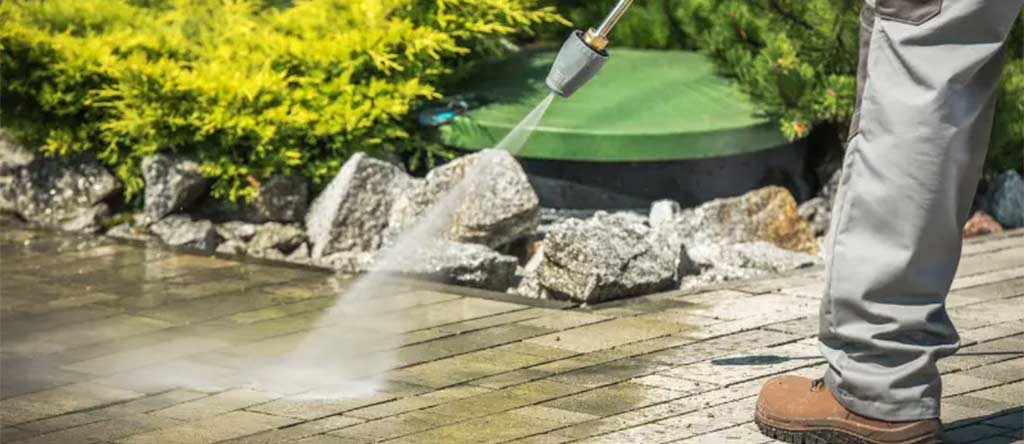
Restore the look of decorative surfaces with professional stamped concrete cleaning services. From patios and walkways to driveways and pool decks, expert pressure washing removes dirt, stains, and buildup without damaging the finish. Proper cleaning helps preserve appearance and extend surface life.
Sports Court Cleaning
Keep sports courts clean, safe, and playable with professional pressure washing services. From basketball and tennis courts to surrounding concrete areas, expert cleaning removes dirt, algae, and surface buildup effectively. Routine maintenance improves traction, appearance, and overall court performance.
Retaining Wall Cleaning
Keep retaining walls looking clean and structurally sound with professional cleaning services. From concrete and stone walls to landscaped retaining systems, expert pressure washing removes dirt, algae, and buildup safely. Proper cleaning helps protect surfaces and maintain a polished property appearance.